Putting the equipment together is only the start
MIT researchers have demonstrated a robotic optics laboratory that can assemble a working laser setup, adjust it and restore its alignment after a disturbance. MIT highlighted the work on 17 September ahead of a planned IROS conference presentation.
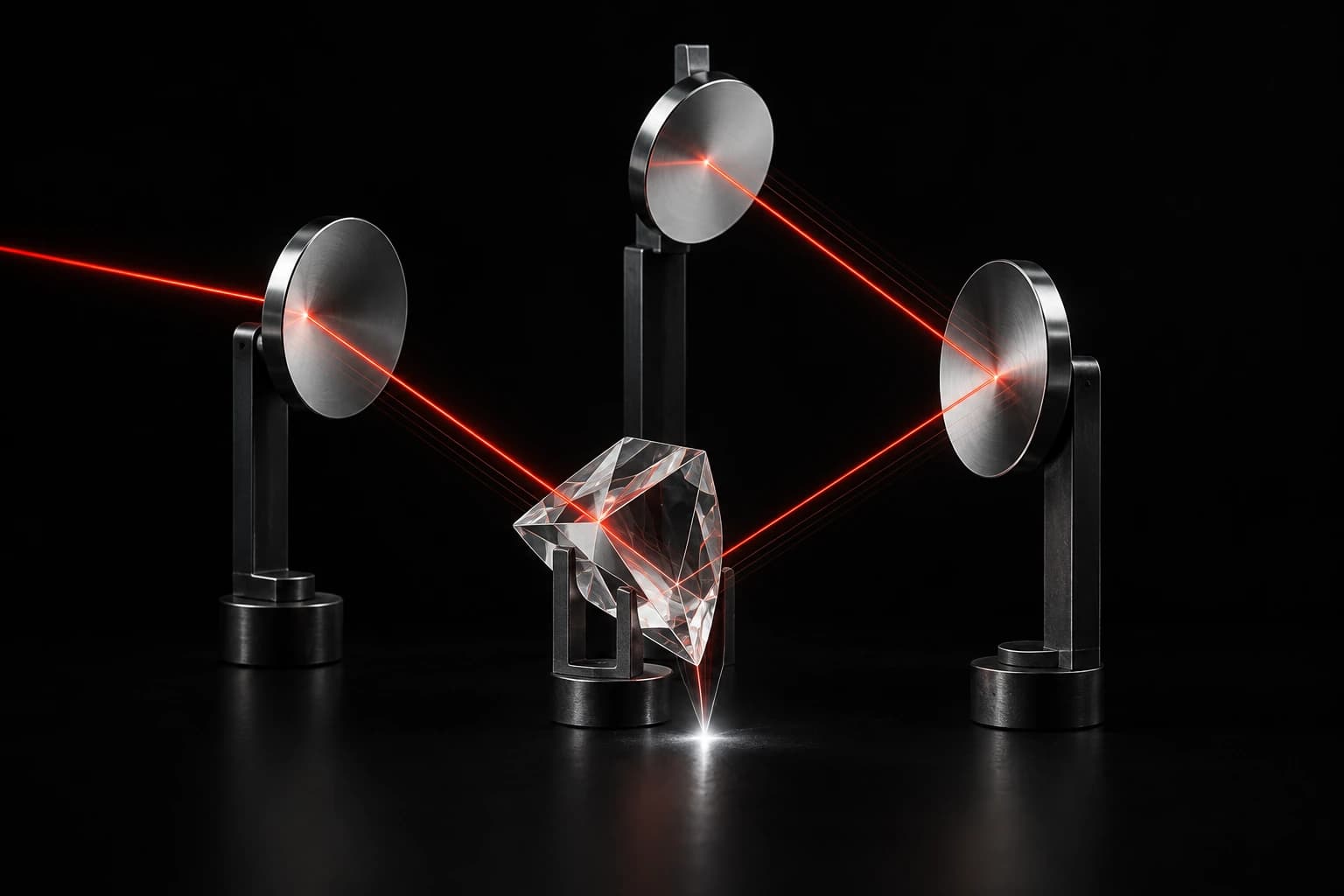
According to MIT, the system carried out 50 manoeuvres within 30 minutes to build a laser cavity. This is an arrangement of mirrors and a crystal in which light is repeatedly amplified. The team is also developing remote access; it is not announcing a public cloud laboratory ready for anyone to book.
The practical problem is easy to miss in discussions of AI for science. A proposed experiment is not an experiment that has been set up correctly. And a correctly assembled instrument can still drift out of adjustment.
The light tells the system what to change
The hardware uses standard optical components in custom holders that a robotic arm can pick up. Cameras locate the parts, while a separate motorised tool makes fine adjustments. The point is to connect placement with measurement, rather than assume that a part is working because it reached its destination.
In the open paper, the user supplies the experimental layout. The system then uses camera measurements and optimisation routines to refine the alignment. It repeatedly checks the result of a movement against the optical signal.
The authors report restoring the laser signal in all ten tests of a displaced component. A separate test that simulated drift by turning mirror knobs succeeded in nine of ten trials. These are small, controlled tests, not a reliability figure for every optical experiment.
Not a chatbot running a laboratory
This project sits alongside earlier work by members of the group on AI-driven optics. That earlier platform combined generative AI, vision and robotics to turn user goals into optical configurations and carry out measurements.
The distinction is useful. The newer paper concentrates on assembly, alignment and recovery. It lists adding agentic AI or learning-based strategies among possible future directions. Describing the present result as an AI scientist independently inventing and executing research would go beyond the evidence.
A system that can keep an instrument working may be less dramatic than that label. It can still address a real bottleneck between a software-generated plan and a physical measurement.
The next test is a less predictable lab
The demonstration leaves practical questions for wider use: how reliably the approach transfers to unfamiliar layouts, how much preparation each component needs and what happens when a failure falls outside the recovery routines.
Model Current's reading is that the strongest result is the feedback loop. The system does not merely move equipment; it checks a physical outcome and adjusts. More ambitious claims about general laboratory autonomy would need broader evidence.
Sources
- MIT News: robotic lab runs optics experiments on demand17 September 2026 report on the apparatus, the 50-manoeuvre/30-minute demonstration, remote-access development and forthcoming presentation.
- Choi and colleagues: closed-loop robotic optical systemsOpen manuscript first posted 23 March 2026. Methods, user-provided layout, recovery results in Tables II–III, and future directions reviewed in the full PDF.
- Uddin and colleagues: AI-Driven Robotics for OpticsEarlier work, first submitted May 2025 and revised November 2025. Abstract used only to distinguish its generative-AI platform from the newer feedback-control demonstration.