Practice before the hardware
A medical robot cannot learn by making thousands of casual mistakes around a patient. Nvidia's answer is to move more of that practice into simulation.
The company has released a GPU-native Medical Physics Simulation framework inside Isaac for Healthcare. Developers can use it to model how anatomy, instruments, sensors and robot policies interact before moving to hardware-heavy tests.
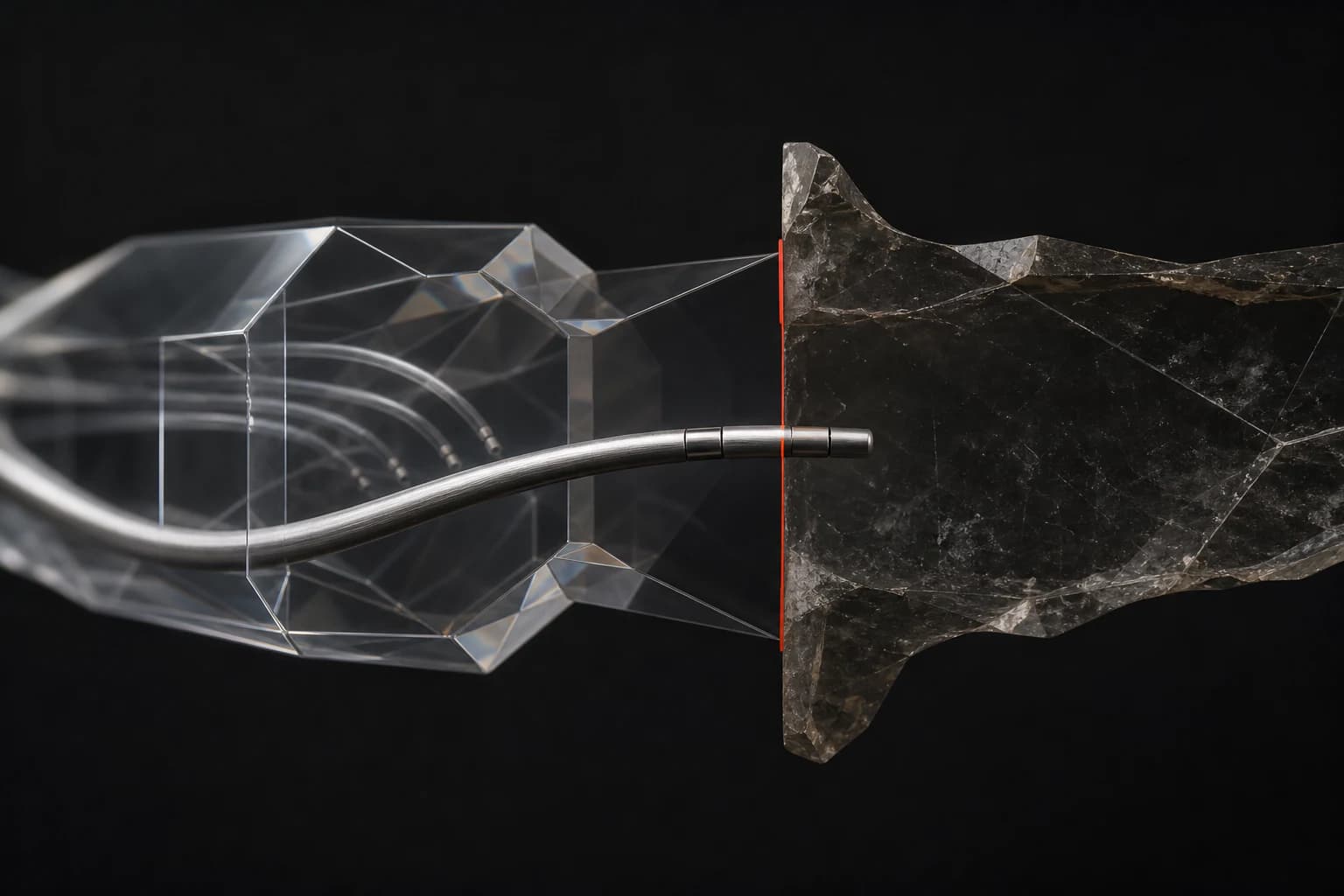
The first public workflows focus on flexible devices such as catheters and guidewires moving through vascular anatomy. The software can simulate contact, friction and motion, add a synthetic X-ray view and then train or evaluate a robot policy in that environment.
This does not make the robot ready for a hospital. It gives developers a faster place to find obvious failures and generate situations that are hard, rare or unsafe to collect in the real world.
What has actually been released
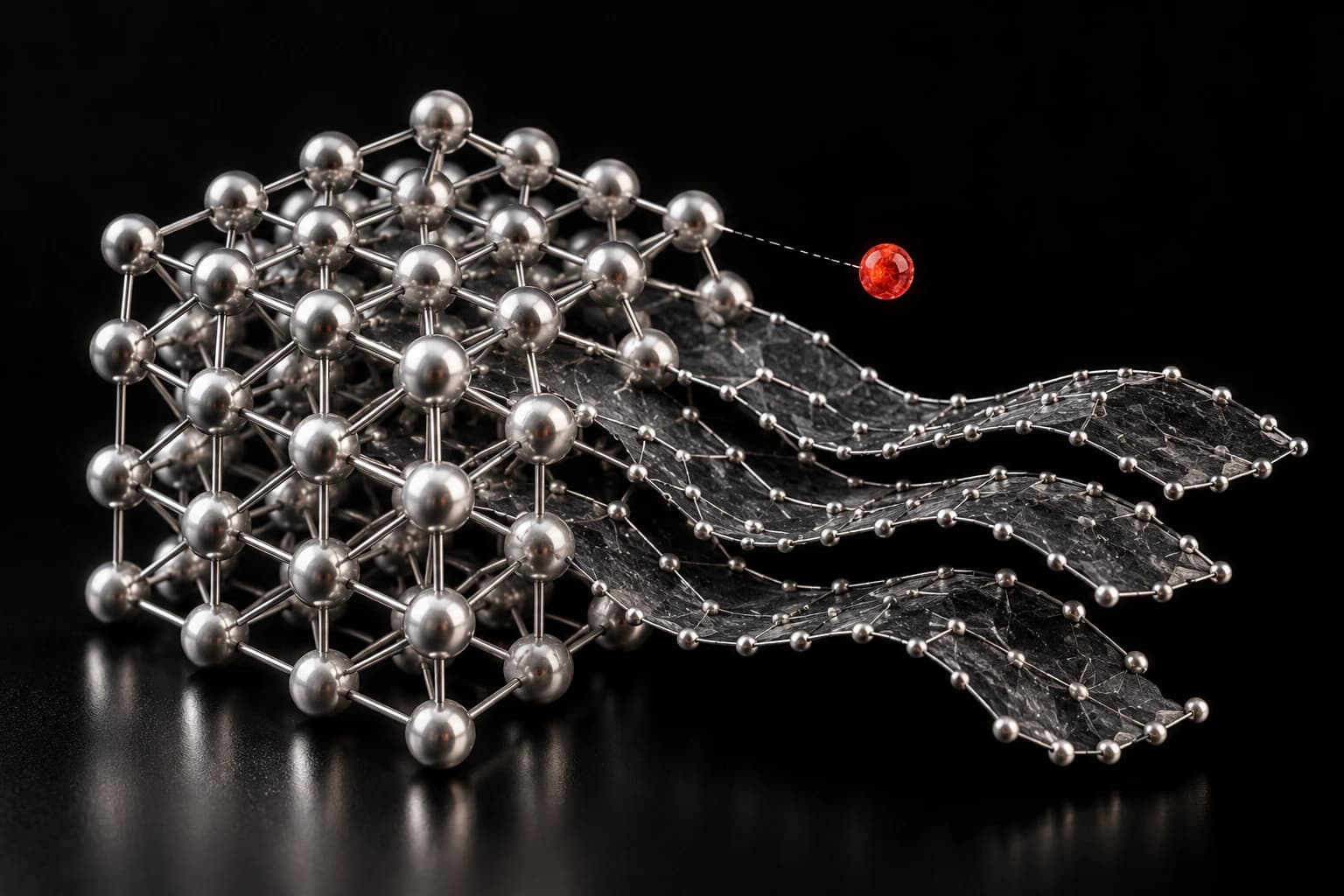
The framework brings together several kinds of simulation. Classical solvers handle known physical rules such as contact and device motion. Generative world models can learn visual and physical patterns from data. Robot-learning tools then use those environments for repeated training.
Nvidia has published the main Isaac for Healthcare repository and documentation. One new component, Cosmos-H-Dreams, streams a generated surgical scene that changes in response to instrument controls. Its source code is under the Apache 2.0 licence, while its model weights use Nvidia's separate Open Model licence.
That licence split is worth noticing. The system is inspectable and adaptable, but 'open source' does not mean every component comes with identical terms or that a hospital can deploy the software without further engineering and validation.
The public documentation also lists real constraints. Cosmos-H-Dreams needs an Nvidia GPU with at least 12GB of memory, recent drivers and a container setup. Its repository notes an image-flicker issue under heavy GPU load. This is developer infrastructure, not a finished medical product.
The speed claim measures training, not surgery
Nvidia says its GPU-native approach can run hundreds of simulation environments at once. In the example highlighted at launch, 8,192 training environments ran in parallel and reduced one learning task from more than five hours to under two minutes.
The linked research comes from FF-SRL, a surgical-robot learning environment presented at the 2024 IEEE/RSJ International Conference on Intelligent Robots and Systems. Its authors put both the physics simulation and reinforcement-learning policy on one GPU, avoiding repeated transfers between a CPU and GPU. They reported an order-of-magnitude training improvement on a tissue-manipulation task and released their code.
That is a meaningful engineering result. It says a particular simulated training loop can run much faster than its comparison system.
It does not show that a robot trained this way performs surgery safely, transfers cleanly from simulation to different bodies or improves patient outcomes. Those questions require different tests.
Companies are trying the stack, carefully
Nvidia names several medical-device companies using or exploring the tools. CMR Surgical and Cambridge Consultants are working with a generative simulator for soft-tissue procedures. Johnson & Johnson MedTech is using the framework to build digital twins of a robotic platform for urology. XCath is training endovascular policies, while Medtronic is exploring simulated X-ray sensing for catheter-navigation research.
These descriptions come from Nvidia and the companies involved. They show commercial interest, not regulatory approval or completed clinical validation. Nvidia does not report comparative patient results in the launch material.
The most realistic near-term value may be less dramatic: reusable test environments, cheaper iteration, a larger set of failure cases and better documentation before a device reaches expensive physical studies.
A simulation becomes evidence only after it earns trust
The US Food and Drug Administration already accepts computational modelling and simulation as part of medical-device development and regulatory submissions. It describes simulation as a complement to bench testing, animal studies and clinical evidence, not an automatic replacement for them.
Its guidance asks manufacturers to show that a computational model is credible for the specific question it is being used to answer. The amount of verification and validation should rise with the risk of getting that answer wrong.
There is a further wrinkle here. The FDA's 2023 credibility guidance applies to physics-based and mechanistic models. It explicitly does not cover standalone machine-learning or AI models. A framework that mixes classical physics with generative simulation therefore needs careful boundaries around what each part can support.
What is confirmed is that code, documentation and example workflows are public. The speed result comes from a published benchmark, and companies say they are using the tools in development. What remains open is the hard part: fidelity across varied anatomy, transfer to physical systems, reproducibility outside Nvidia's stack and the evidence regulators will accept for each use.
Virtual practice can make medical robotics development more practical. The red line is simple. A robot doing well in a synthetic body is not the same as a robot proven safe in a real one.
Sources
- Nvidia — Medical Physics Simulation launchPrimary company announcement published 22 July 2026. Source for the framework, example workflows, company users and launch benchmark claims.
- Nvidia Isaac for Healthcare — Medical Physics Simulation documentationPrimary technical documentation for the GPU-native framework, available simulators and the combination of classical and generative simulation.
- Isaac for Healthcare — Cosmos-H-Dreams repositoryPrimary source code and developer documentation. Source for the July 2026 release, interactive modes, requirements, known issue and separate code and model-weight licences.
- FF-SRL research paperPrimary research paper, published at IROS 2024 and revised in 2025. Source for the single-GPU design, public code and reported acceleration of a simulated surgical-robot learning task.
- US Food and Drug Administration — Credibility of computational modelling and simulationPrimary regulatory guidance. Source for the risk-informed credibility framework and its scope, including the exclusion of standalone machine-learning and AI models.